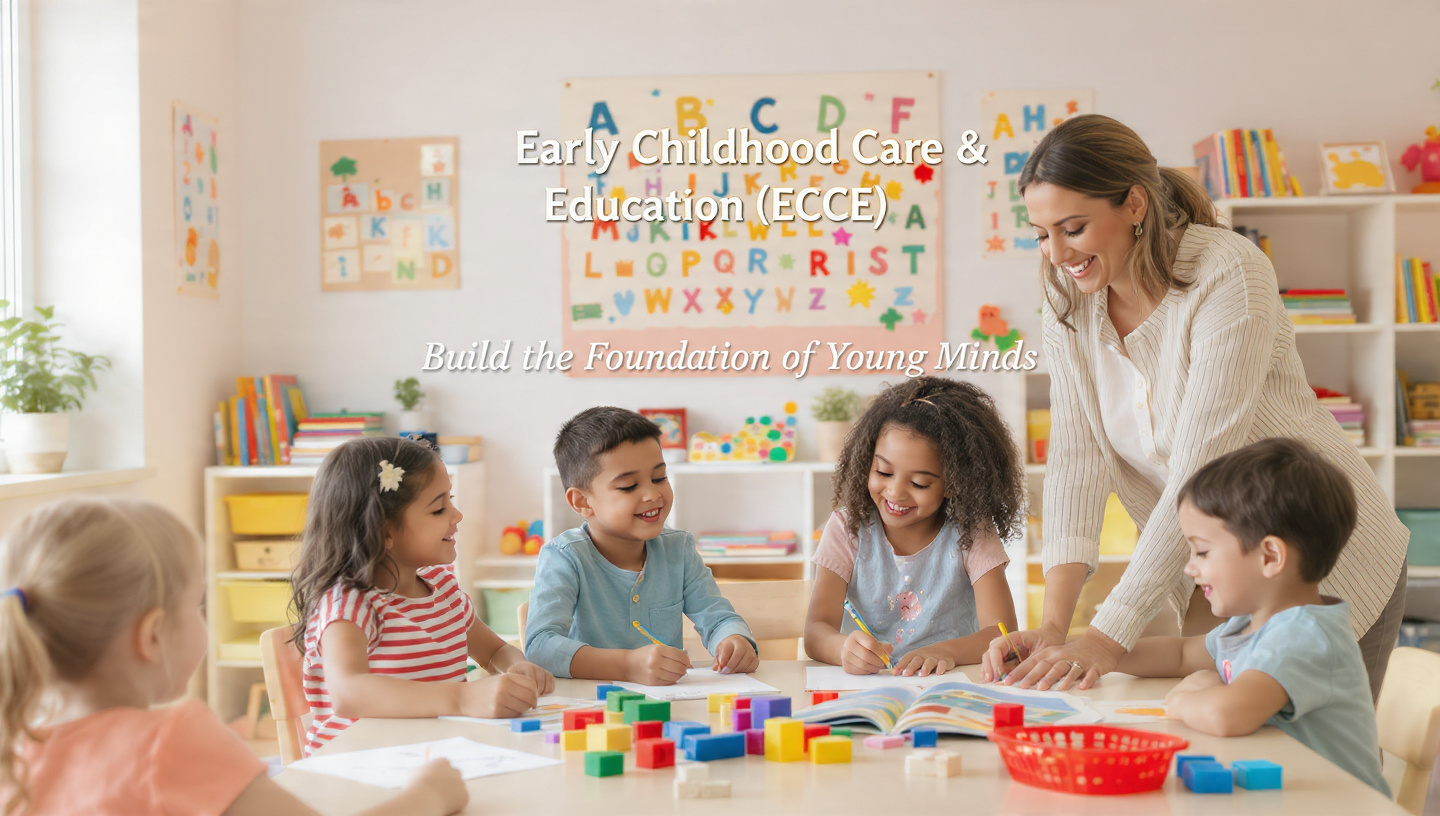
Early Childhood Care & Education (ECCE): Complete Guide, Career Scope & Benefits
Early Childhood Care & Education (ECCE) is one of the most important and fast-growing fields in the education sector. It focuses on the holistic development of children from birth to 8 years, covering physical, emotional, social, cognitive, and language development. With increasing awareness among parents and government initiatives like NEP 2020, the demand for trained ECCE professionals is rising rapidly.
What is Early Childhood Care & Education (ECCE)?
Early Childhood Care & Education (ECCE) refers to structured learning, care, and nurturing provided to young children during their formative years. These early years are crucial as 85% of brain development happens before the age of 6. ECCE programs aim to lay a strong foundation for lifelong learning and well-being.
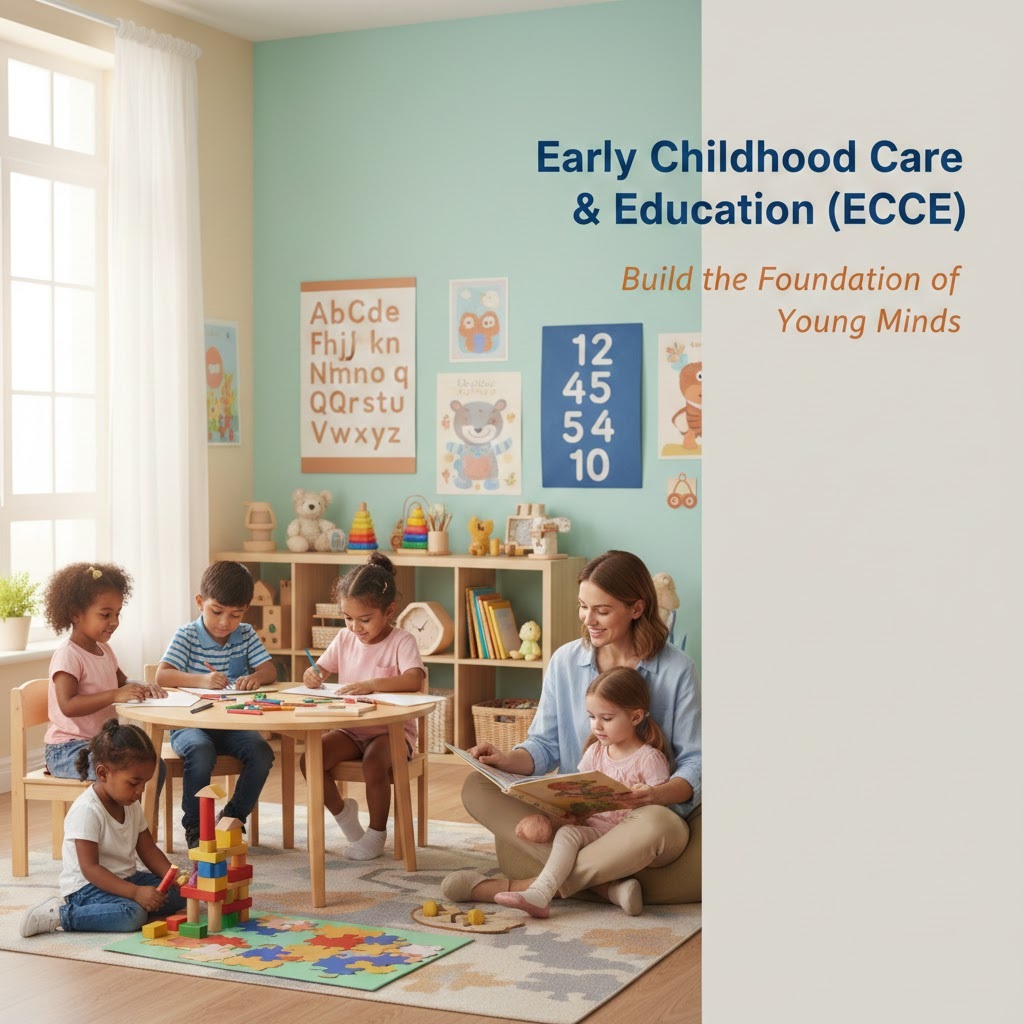
ECCE includes:
- Pre-school education
- Child health & nutrition
- Emotional and social development
- Play-based and activity-based learning
Importance of ECCE in Modern Education
ECCE plays a vital role in shaping a child’s personality and learning ability. Quality early childhood education helps children:
- Develop strong communication skills
- Build confidence and emotional stability
- Improve learning outcomes in later schooling
- Adapt better socially and academically
Governments, NGOs, private schools, and international organizations now strongly emphasize trained ECCE educators.
Objectives of ECCE Course
The main objectives of the ECCE course are:
- To understand child growth and development stages
- To train educators in play-way and activity-based teaching
- To promote physical, mental, and emotional well-being of children
- To develop skills for handling young children effectively
- To create awareness about child nutrition, health, and safety
Eligibility Criteria for ECCE Course
The eligibility for ECCE course may vary by institute, but generally includes:
- Minimum qualification: 10+2 (any stream)
- Candidates interested in teaching, childcare, or psychology
- Mothers, homemakers, teachers, and aspiring educators can also apply
Duration of ECCE Course
The ECCE course is available in multiple formats:
- Certificate Course: 3 to 6 months
- Diploma in ECCE: 1 year
- Advanced Diploma in ECCE: 2 years
Flexible learning modes such as regular, online, and distance learning are also available.
ECCE Course Syllabus (Detailed)
The ECCE syllabus is designed to provide both theoretical and practical knowledge:
Core Subjects:
- Introduction to Early Childhood Education
- Child Growth and Development
- Child Psychology
- Health, Nutrition & Safety
- Curriculum Planning for Pre-School
- Teaching Methods & Classroom Management
- Play, Creativity & Learning Activities
- Observation and Assessment of Children
- Inclusive Education & Special Needs
Practical Training:
- Teaching practice
- Lesson planning
- Activity and teaching aid preparation
- Internship / practical exposure
Teaching Methodology in ECCE
ECCE focuses on child-centered learning approaches such as:
- Play-way method
- Storytelling and role play
- Music, art, and movement
- Experiential and activity-based learning
These methods ensure joyful learning and overall child development.
Career Scope After ECCE Course
After completing the ECCE course, candidates can explore various career opportunities:
Job Opportunities:
- Pre-School / Nursery Teacher
- Montessori Teacher
- Child Care Center In-charge
- Day Care Coordinator
- ECCE Trainer
- Teaching Assistant
- NGO / ICDS Worker
- Home Tutor
Work Areas:
- Play schools & pre-schools
- Nursery & kindergarten schools
- Day care centers
- NGOs & social welfare organizations
- Government & private educational institutions
Salary After ECCE Course
Salary depends on qualification, experience, and organization:
- Freshers: ₹8,000 – ₹15,000 per month
- Experienced educators: ₹20,000 – ₹35,000 per month
- Own Play School / Day Care: Unlimited earning potential
With experience and advanced training, salary growth is significant.
Advantages of ECCE Course
- High demand in India and abroad
- Suitable for women, mothers, and homemakers
- Opportunity to start own pre-school or daycare
- Flexible working hours
- Emotionally rewarding career
ECCE Course vs Traditional Teaching Courses
| Feature | ECCE Course | Traditional Teaching |
|---|---|---|
| Focus | Early childhood (0–8 years) | School-level education |
| Teaching Style | Play & activity-based | Subject-based |
| Career Entry | Fast | Longer process |
| Practical Exposure | High | Moderate |
Why Choose ECCE as a Career?
If you love working with children and want a meaningful, stable, and respected career, ECCE is an excellent choice. It allows you to contribute to nation-building by shaping young minds at the foundation level.
Frequently Asked Questions (FAQs)
Q1. Is ECCE course recognized?
Yes, ECCE courses offered by reputed institutions are widely accepted in pre-schools, NGOs, and private institutions.
Q2. Can I start my own play school after ECCE?
Yes, ECCE provides the required knowledge and skills to start your own play school or daycare center.
Q3. Is ECCE suitable for homemakers?
Absolutely. ECCE is ideal for homemakers who want a professional career with flexible working options.
Q4. What is the scope of ECCE in India?
With increasing pre-schools and awareness of early education, ECCE has excellent scope in India.
Q5. Is ECCE course available online?
Yes, we offer ECCE through online and distance learning modes.
Conclusion
Early Childhood Care & Education (ECCE) is more than just a course—it is a pathway to a fulfilling career dedicated to shaping the future generation. With rising demand, flexible career options, and strong social impact, ECCE is one of the best career choices in the education sector today.
If you are passionate about teaching young children and making a difference, enrolling in an ECCE course can be your first step toward a bright and meaningful future.
People Also Search: ECCE course, Early Childhood Care and Education, ECCE syllabus, ECCE career scope, ECCE teacher salary, ECCE diploma, pre-school teacher course